 Fjord Compass Taco
An old game with old rules
Riddles are among the oldest word games we have. In Greek tradition the Sphinx asked travellers what walks on four legs in the morning, two at noon and three in the evening; Oedipus answered "a human", crawling as a baby, walking upright, then leaning on a stick in old age. The riddle works because "morning", "noon" and "evening" quietly stand for stages of life.
The Exeter Book, an Old English manuscript from the tenth century, preserves close to a hundred riddles, many describing everyday objects (a bookworm, an onion, a shield) in deliberately misleading voices. And J. R. R. Tolkien built a whole chapter of The Hobbit (1937), "Riddles in the Dark", around a riddle contest that ends with a question that isn't really a riddle at all: "What have I got in my pocket?" Even fictional riddlers argue about fair play.
The hidden constraint is a word
Almost every riddle hinges on one word carrying two meanings. The question pushes you towards the common sense; the answer lives in the other. Your job isn't to know more facts. It's to slow down and ask of each word: "What else could this mean?"
Worked example: keys
"What has keys but can't open locks?" Circle "keys". The riddle pairs it with "locks", nudging you towards door keys. The other meaning, the keys of a keyboard instrument, gives a piano. (A computer keyboard works too; a fair riddle can have more than one good answer, and spotting a second valid one is reasoning, not cheating.)
Worked example: footsteps
"The more you take, the more you leave behind." "Take" usually means "acquire", but it also pairs with steps: you take a step. Read that way, each step taken leaves a footprint behind: footsteps.
The toolkit riddlers use
| Device | How it misleads | Example |
|---|---|---|
| Homonym | One spelling, two meanings | "bark": tree or dog |
| Metaphor disguise | Describes an object as a creature | "It has a neck but no head": a bottle |
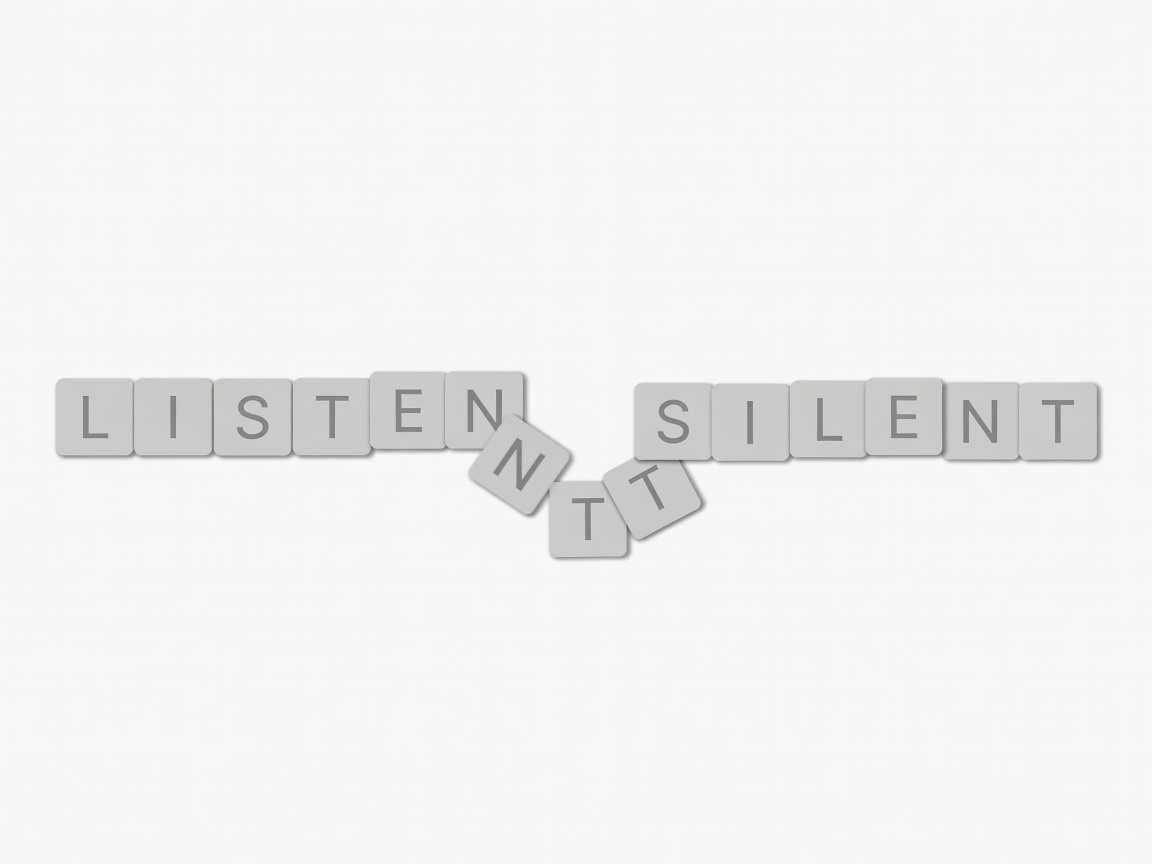
| Anagram | Same letters, new order | LISTEN → SILENT |
| Hidden word | The answer sits inside the clue's letters | "Part of the cast ownership" hides STOW |
| Grammatical shift | A verb read in its other sense | "dries": becomes dry, or dries something |
Cryptic clues: riddles with a contract
The first crossword is usually credited to Arthur Wynne, published in the New York World on 21 December 1913. British setters later developed the cryptic crossword; Edward Powys Mathers, writing as "Torquemada" in The Observer from 1926, helped shape the form. A cryptic clue makes a promise: it contains a straight definition (at the start or end) plus wordplay that builds the same answer another way.
Worked example: GEGS (9,4)
A famous joke clue is simply "Gegs (9,4)". There's no definition word; the trick is to describe what's been done to the letters. G-E-G-S is the word EGGS jumbled up, and a cryptic setter would indicate a jumble with words like "mixed" or "scrambled". So the answer is SCRAMBLED EGGS: nine letters, then four. The pleasure comes from realising the clue is describing itself.
Fair cryptics never require a leap you can't justify. If you can explain both halves (definition and wordplay), you've solved it; if you can only explain one, keep looking.
Practise like a riddler
- Read the riddle aloud. Puns often hide in sound, not spelling.
- Underline every noun and verb with a second meaning.
- Ask what object could be described as a person, animal or body.
- Test your answer against every line, not just the first.
- Write your own: pick an object, list its parts in odd words, and hide the obvious one.
Writing riddles is the fastest way to get better at solving them, because you start to see the seams from the inside.
Have a riddle with an answer you don't believe? Send it on WhatsApp or continue to See Beyond the Shape.
Sources
- Exeter Book · Riddle of the Sphinx
- Arthur Wynne and the first crossword · Cryptic crossword
- Tolkien, J. R. R. The Hobbit. George Allen & Unwin, 1937.